
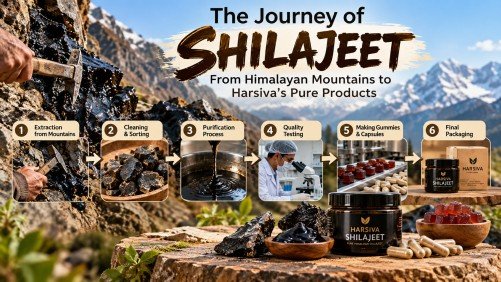
From Mountain to Jar: How Shilajit Is Collected, Purified and Prepared for Use
From careful collection in the mountains to purification, testing and final packaging, every stage matters.
Shilajit has a long history of use in traditional wellness practices, particularly across the Himalayan region.
But what actually happens between finding this naturally occurring substance in mountain rocks and seeing it
packaged as resin, capsules or gummies? The journey involves careful collection, cleaning, purification,
quality checks and controlled packaging.
For consumers, the finished jar may look simple. Behind it, however, there can be a multi-stage process
designed to transform naturally occurring raw material into a cleaner and more convenient form for use.
Brands such as Harsiva focus on bringing Shilajit to consumers in different formats,
including traditional resin as well as capsules and gummies.
Where Does Shilajit Come From?
Shilajit is a naturally occurring, dark, resin-like substance associated with mountainous regions.
It develops over long periods through the gradual transformation of organic material under specific
environmental and geological conditions. It is commonly associated with high-altitude areas of the Himalayas
and other mountain ranges.
Because it occurs naturally and can vary considerably in composition, the quality of raw material can depend
on its source, collection practices and subsequent processing. This makes responsible sourcing and
purification important parts of the journey.
Step-by-Step: From Mountain Rock to Finished Product
1
Careful Collection
The journey begins in mountainous regions where naturally occurring Shilajit is identified and
collected from suitable rock surfaces. Collection requires experience because the material can be
mixed with rock particles, soil and other naturally occurring impurities.
2
Sorting and Initial Cleaning
Once collected, the raw material needs to be sorted. Visible pieces of rock, dirt and other unwanted
material are separated. This initial stage helps prepare the raw Shilajit for further processing.
3
Purification
Raw Shilajit is not simply ready to consume after collection. It generally requires purification
and filtration to remove unwanted physical impurities. Depending on the processing method, the material
may be dissolved, filtered and processed through multiple stages before being concentrated again.
4
Concentration and Preparation
After purification, the material can be concentrated into a thicker resin-like form. The objective
is to create a more consistent finished ingredient while retaining the characteristics expected from
purified Shilajit.
5
Quality Testing
Quality testing is an important part of any modern supplement supply chain. Depending on the product
and applicable standards, testing may examine parameters such as identity, purity, microbial quality
and the presence of unwanted contaminants. This step is particularly important because naturally
sourced materials can vary from batch to batch.
6
Creating Different Formats
Purified Shilajit can be prepared for different consumer formats. Traditional resin is one option,
while capsules provide a convenient measured format. Gummies are another modern option for consumers
who prefer an easier-to-use supplement format.
7
Filling and Packaging
Once the product is ready, it is filled into suitable food- or supplement-grade packaging.
Containers are sealed, labelled and prepared for storage and distribution. Proper packaging helps
protect the product from unnecessary exposure to moisture, heat, light and contamination.
Why Purification Matters
One of the most important differences between raw material and a finished Shilajit product is purification.
A naturally sourced substance can contain unwanted particles picked up during formation and collection.
Purification and filtration are therefore essential steps before a product is prepared for consumption.
This is also why consumers should look beyond attractive packaging when choosing a Shilajit product.
Information about sourcing, processing, testing and ingredients can provide a better understanding of what
they are actually purchasing.
From Traditional Resin to Modern Wellness Formats
The modern Shilajit market combines traditional forms with contemporary convenience.
Harsiva offers Shilajit in formats such as resin, capsules and gummies, giving consumers different
options depending on their preferred way of incorporating the product into their routine.
What Should Consumers Look For?
When purchasing Shilajit, consumers should consider more than simply the word “natural” on a label.
Look for clear ingredient information, appropriate packaging, responsible sourcing and evidence of suitable
quality-control practices. Products should also be purchased from reputable sellers and used according to
their label directions.
It is equally important to remember that supplements are not a substitute for a balanced diet or medical
treatment. Anyone who is pregnant, taking medication, has an existing medical condition or is unsure whether
a particular supplement is appropriate should speak with a qualified healthcare professional before use.
The Journey Behind Every Jar
From a remote mountain environment to a finished product on a shelf, Shilajit goes through considerably more
than simply collection and packaging. Sourcing, sorting, purification, testing, formulation and packaging
all contribute to the final product.
For a brand like Harsiva, presenting Shilajit in resin, capsule and gummy formats is about
combining the traditional identity of this naturally occurring substance with modern consumer convenience.
Understanding the journey behind the product also helps consumers make more informed choices about the
wellness products they bring into their daily routines.
Leave a Reply