
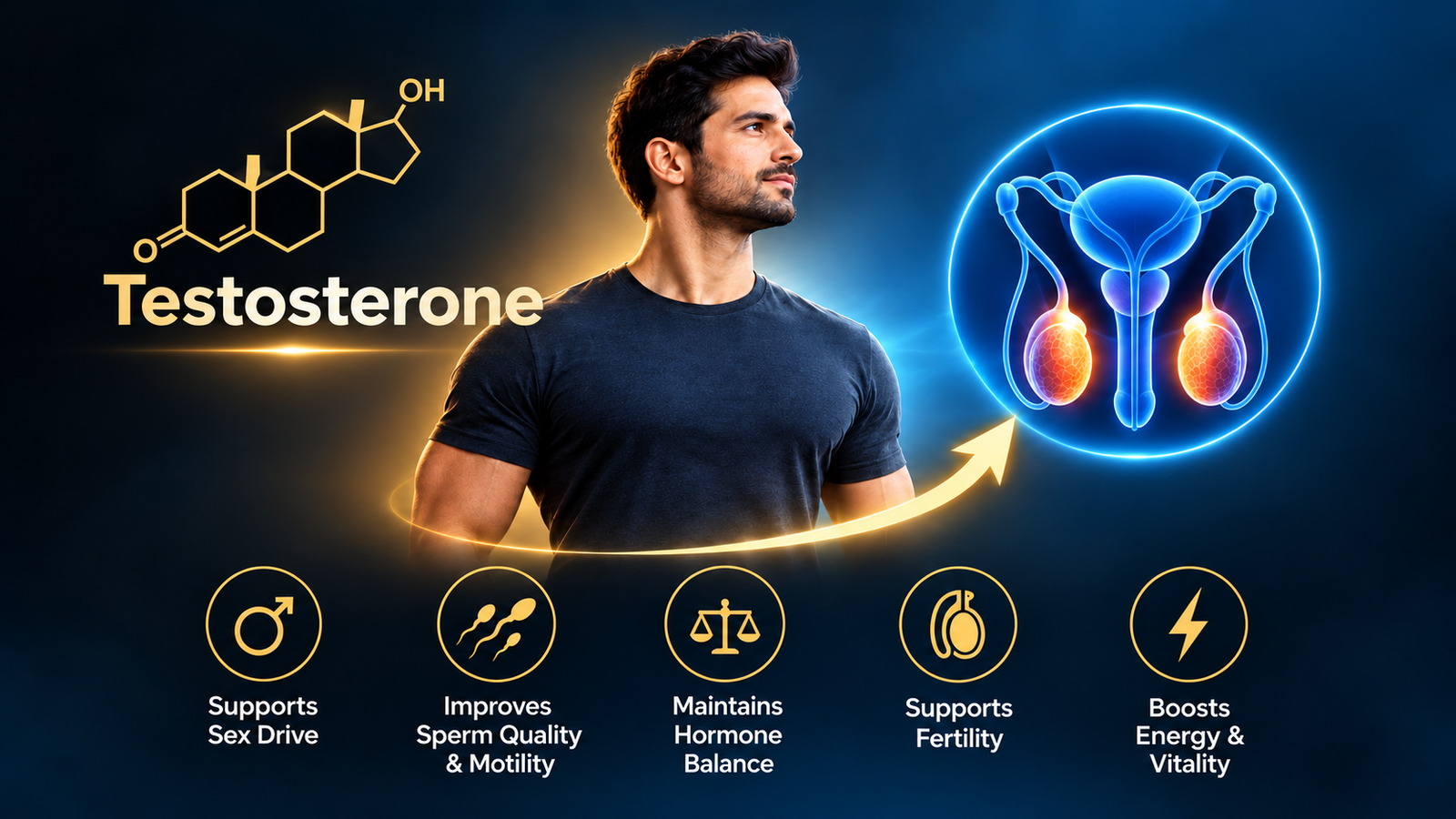
Can ”HARSIVA” Shilajit Support Testosterone Levels? What Clinical Research Says
Shilajit and Testosterone: What Does Clinical Research Say?
Shilajit has been used for centuries in traditional Ayurvedic practices and is increasingly being studied by modern researchers for its potential role in male wellness. One area of growing scientific interest is the relationship between purified Shilajit and testosterone levels.
While traditional use provides an important historical background, clinical research is essential for understanding whether these potential benefits can be supported by scientific evidence.
A Human Clinical Study on Purified Shilajit
A notable clinical study titled “Clinical evaluation of purified Shilajit on testosterone levels in healthy volunteers” investigated the effects of purified Shilajit on male androgenic hormones.
The study was conducted as a randomized, double-blind, placebo-controlled clinical trial, which is an important research design for reducing bias and comparing treatment effects.
The participants were healthy men between 45 and 55 years of age. The Shilajit group received 250 mg of purified Shilajit twice daily for 90 consecutive days.
Researchers evaluated testosterone and other hormone levels before and after the supplementation period and compared the results with those of the placebo group.
What Did the Researchers Find?
After 90 days of supplementation, the researchers reported statistically significant increases in several hormone-related parameters among participants who received purified Shilajit compared with the placebo group.
Total Testosterone
The study reported a significant increase in total testosterone levels following supplementation with purified Shilajit.
Testosterone is an important androgen hormone involved in several physiological processes, including reproductive function, muscle physiology, bone health and overall male hormonal function.
Free Testosterone
The study also reported a significant increase in free testosterone.
Free testosterone represents the portion of testosterone that is not tightly bound to certain blood proteins and is therefore considered more readily available to tissues.
DHEAS
The researchers also observed a significant increase in dehydroepiandrosterone sulfate (DHEAS).
DHEAS is a steroid hormone produced primarily by the adrenal glands and is involved in the body’s androgen-related hormonal pathways.
What About LH and FSH?
An important finding of the study was that LH and FSH levels were maintained.
LH (luteinizing hormone) and FSH (follicle-stimulating hormone) are gonadotropic hormones that play important roles in regulating male reproductive function.
The researchers reported that these hormone levels remained well maintained during the study period while total testosterone, free testosterone and DHEAS increased.
What Does the Study Actually Tell Us?
The findings provide clinical evidence that purified Shilajit may influence certain aspects of the male androgenic hormone profile.
However, the results should be interpreted within the specific context of the study.
The research involved healthy men aged 45–55 years and used a specific purified Shilajit preparation at a defined dosage of 250 mg twice daily for 90 days.
Therefore, the findings should not automatically be generalized to every individual or every Shilajit product available on the market.
It is scientifically more accurate to state that this particular clinical study found significant increases in total testosterone, free testosterone and DHEAS following supplementation with purified Shilajit, compared with placebo.
Why Shilajit Quality Matters
Shilajit is a naturally occurring substance whose composition can vary depending on its geographical source, processing methods and purification.
The clinical study discussed here specifically evaluated purified Shilajit. Therefore, the findings should not be assumed to apply equally to raw, unpurified or unverified Shilajit products.
For consumers, product quality is an important consideration. Factors such as appropriate purification, laboratory testing, quality control and transparency regarding ingredients can help ensure that a Shilajit product is suitable for responsible use.
Is Shilajit a Testosterone Booster?
Based on the available clinical evidence, it would be more scientifically appropriate to describe purified Shilajit as a substance that has shown potential to influence testosterone-related hormonal parameters rather than making a blanket claim that it is a “testosterone booster.”
More research, including larger and independent clinical trials, is needed to establish how consistently these effects occur, how they vary between individuals and what the long-term implications may be.
Conclusion
The relationship between Shilajit and male hormonal health is an emerging area of scientific research.
A randomized, double-blind, placebo-controlled clinical study in healthy men aged 45–55 years found that 90 days of supplementation with purified Shilajit at 250 mg twice daily was associated with significant increases in total testosterone, free testosterone and DHEAS compared with placebo, while LH and FSH levels remained maintained.
These findings are encouraging and provide human clinical evidence for further research into purified Shilajit’s potential role in male wellness.
At the same time, scientific evidence should be interpreted responsibly. The results of one clinical study do not establish that every Shilajit product will produce the same effects in every individual.
Further high-quality research is needed to better understand the mechanisms, effectiveness and long-term safety of Shilajit supplementation.
Scientific Reference
Pandit S, Biswas S, Jana U, De RK, Mukhopadhyay SC, Biswas TK.
“Clinical evaluation of purified Shilajit on testosterone levels in healthy volunteers.”
Andrologia.
PMID: 26395129
DOI: 10.1111/and.12482
PubMed: https://pubmed.ncbi.nlm.nih.gov/26395129/
Disclaimer: This article is provided for educational and informational purposes only. It is not intended to diagnose, treat, cure or prevent any disease or medical condition. Individuals should consult a qualified healthcare professional before starting any dietary supplement, particularly if they have an existing medical condition or are taking medication.
Leave a Reply